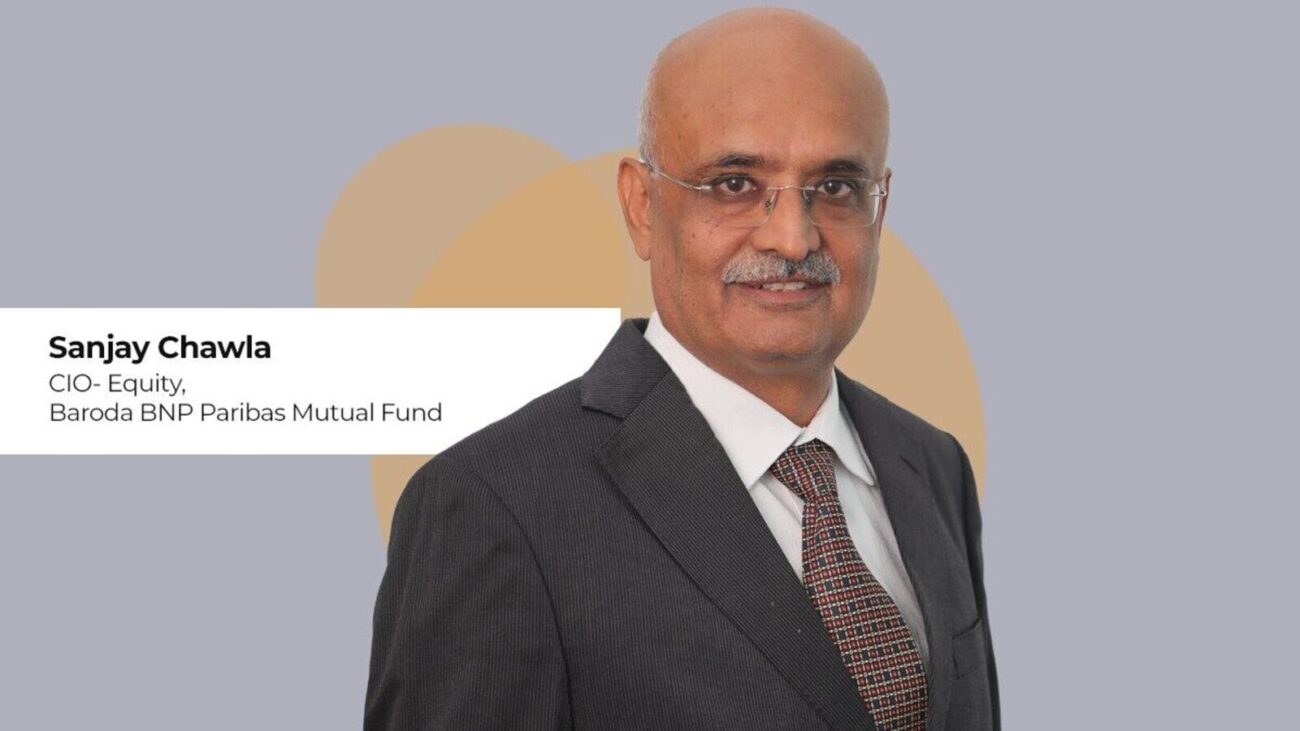
Expert view: Sanjay Chawla, CIO- Equity, Baroda BNP Paribas Mutual Fund, believes the Indian stock market may be in a position where it’s ready or about to make a significant move. In an interview with Mint, Chawla also shared his views on trends on FIIs and DIIs and US Fed rate cut expectations. Here are edited excerpts of the interview:
Can we say the worst is over for the Indian stock market?
There has never been a dearth of potential headwinds in the markets – geopolitical, economic or any other variable.
The fact is that markets have always climbed the wall of worries. The bigger picture is that all the headwinds look very impactful at the point in time; however, in hindsight, they do not seem to be impactful.
This is the difference between a short-term and a long-term horizon. Some of the bigger incidents, like the Global Financial Crisis (GFC) and COVID, are the most prominent examples of this.
Coming to current markets, we believe that there has been a decent time correction in the market for almost a year.
During this period, earnings have certainly moved up (albeit at a slower pace), making valuations lower compared to a year ago. Consequently, the market is potentially poised at the current time.
Should we expect a strong buying ahead of Diwali, followed by a Santa Claus rally?
It is always difficult to predict the short-term market movements as they are predicated on several variables.
Some of the key events to watch out for would be potential rate cuts in the USA and India, and how the festive sales pan out, given the GST cut.
Finally, how is rainfall dispersion despite the acute flooding in a particular region?
We do see overall market valuations having potential compared to the historical averages.
When do you expect earnings to revive significantly? Could it be from the December 2025 quarter or after that?
Aggregate earnings trend can be misleading, as there are many moving parts and noise tends to be high.
When we look at the key earnings drivers—revenue growth, margins, and financial leverage—all the factors seem to be turning favourable.
On the revenue growth side, the current GST rate cut, combined with lower income tax and interest rates, should help revive consumer demand.
Revival of both private and public capex should help capital goods as well. On the margins front, commodity prices have been benign.
Plus, we see operating leverage kicking in. Both may drive margins in the coming period.
Lastly, lower interest rates should benefit lenders and companies with high borrowings as the cost of funds comes down.
DIIs’ equity ownership has surpassed FII holdings for the first time. What is driving this trend?
This is the culmination of the process which started a few years ago. Domestic investors over the period have realised the value of long-term wealth creation that the Indian capital market offers.
This, combined with the efforts of the various market stakeholders, such as mutual funds and regulators, has led to a solid foundation for the markets.
This has resulted in truly “atmanirbhar,” i.e., self-independent markets. We expect this trend to strengthen even further as the financialization of savings continues to accelerate.
We are witnessing strong buzz in the primary market. What is driving investors to the new issues?
An active primary market is generally a healthy sign. On the one hand, it indicates investors’ appetites. On the other hand, it helps to deepen the market, giving entrepreneurs the opportunity to raise capital to fund future growth.
Particularly in current times, we have seen some private equity investors using primary markets to exit their investments.
This sends a strong signal to potential investors that investing in India is not a one-way street. Investors can exit with handsome returns when they so desire, thus encouraging them to look at new investment opportunities.
In case of a rally, what sectors could lead from the front?
Our view is that external-facing sectors are facing headwinds due to global economic uncertainty, tariffs, a slowdown in the global economy, and disruption in the global supply chain.
Geopolitical tension is not helping. The domestic economy is not more resilient and continues to be driven by local demand.
All domestic-facing sectors, including consumption and industrials, are expected to do well.
We think the financial sector has bottomed out in terms of business and valuations. Lastly, we expect both public and private capex to pick up, creating tailwinds for the capital goods sector.
What are your expectations about the US Fed’s rate cuts?
Currently, markets are factoring in two Fed rate cuts in 2025, followed by another two to three cuts in 2026.
Rate cut decisions are always predicated on economic data points. In that context, key factors to look out for would be the impact of tariffs on both inflation and economic growth.
In the interim, there could be some high inflation readings; however, if the US Fed believes that inflation is only transitory, it may press the pedal hard should there be a weakness on the growth front.
Read all market-related news here
Read more stories by Nishant Kumar
Disclaimer: This story is for educational purposes only. The views and recommendations expressed are those of the expert, not Mint. We advise investors to consult with certified experts before making any investment decisions, as market conditions can change rapidly and circumstances may vary.
