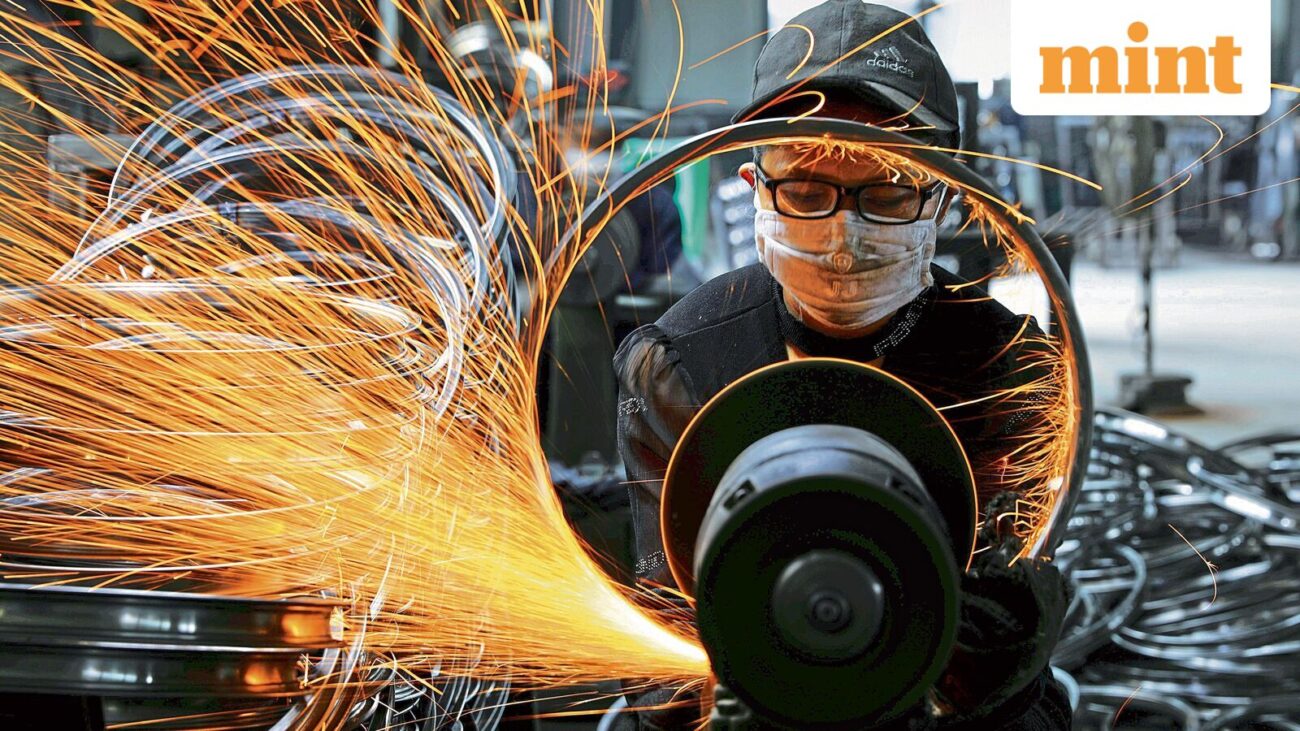
Business activity in India’s manufacturing sector has lost a bit of momentum. The seasonally adjusted HSBC India Manufacturing Purchasing Managers’ Index (PMI) hit a four-month low of 57.7 in September from 59.3 in August. New orders, output and input buying all rose at the slowest rates since May, while job creation retreated to a one-year low, said the PMI survey.
The drop in the headline index might be a one-off as manufacturers are confident that the reduction in goods and services tax (GST) will boost domestic demand. So, companies are signalling upbeat production forecasts for the coming year. The Future Output Index, a sub-index of the PMI that measures business confidence, hit a seven-month high in September. It is likely that consumers delayed purchases until manufacturers passed on the GST cuts through lower prices. Demand is therefore expected to bounce back in the run-up to the festive season.

View Full Image
More non-US demand
On the other hand, export demand offered some cushion with the PMI’s New Export Orders Index rising in September from August. There was a pick-up in growth of international orders as Indian manufacturers saw improvements in demand from Asia, Europe, the Americas and the Middle East. Amid tariffs, demand from outside the US may be offsetting a drop in demand from the US, but it is too early to celebrate.
Nomura’s leading index of Asia ex-Japan’s aggregate exports (NELI) fell to 91.9 in October from 92.2 in September, led by weakening import demand from China and a moderation in PMIs for China and other emerging markets. NELI has a three-month lead time.
“Asia’s actual export growth is already cooling as a result of payback from tariff-driven frontloading, the impact of the tariffs and high policy uncertainty delaying non-AI capex spending,” said Nomura Research’s 29 September report. Lagged effects of US tariffs and a slowdown in China’s durable goods demand could slow Asian export growth further.
‘Rate cuts hinge on trade deal, GST reform’
Meanwhile, the Reserve Bank of India (RBI) kept the repo rate unchanged at 5.5% on Wednesday. Amid tariff woes, RBI has revised its FY26 gross domestic product growth estimate to 6.8% from 6.5%. “Further rate cuts will be contingent on whether India and US reach a trade deal and how consumption reacts to GST reduction,” said Gaura Sen Gupta, economist at IDFC First Bank. If the two countries strike a trade deal, there will be less need for further rate cuts, she added.
